

Keywords
historical urban structures
Montenegrin coast
reaffirmation
How to Cite
Abstract
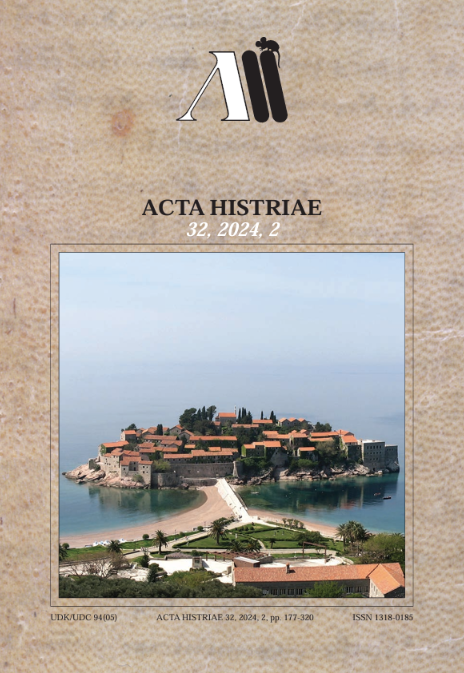
This paper explores historical urban structures on the coast of Montenegro, and examines their characteristics and potential for reaffirming their architectural values. It defines and maps urban structures, establishing an architectural and urban typology of towns and settlements primarily originating from the medieval period. The study then analyses the development and transformation of these structures. It outlines criteria for preserving architectural and urban values, and for new interventions in historical settlements. It also proposes potential parameters for enhancing the relationship between old and new structures, aiming to protect the recognised architectural and urban values. In this way, preserved historical structures can reaffirm their identity by maintaining their original characteristics while adapting to the contemporary changes.
References
Ashworth, Gregory John & John E. Tunbridge (2011): The Tourist-Historic City. Retrospect and Prospect of Managing the Heritage City. London – New York, Routledge, Taylor & Francis Group.
Barrera-Fernández, Daniel, Hernández-Escampa, Marco & Antonia Balbuena Vázquez (2016): Tourism Management in the Historic City. The Impact of Urban Planning Policies. International Journal of Scientific Management and Tourism, 2, 4, 349–367.
Bošković, Đurđe (1962): Stari Bar. Beograd, Savezni institut za zaštitu spomenika kulture.
Bošković, Đurđe, Mijović, Pavle & Mirko Kovačević (1981): Ulcinj I. Beograd, Arheološki institut – Muzej Ulcinj – Republički zavod za zaštitu spomenika kulture SR Srbije.
Bourdeau, Laurent, Gravari-Barbas, Maria & Mike Robinson (2015): World Heritage, Tourism and Identity. Inscription and Co-production. London, Routledge.
Crnjanski, Miloš (1928): Boka Kotorska. Beograd, Jadranska straža.
Danilović Hristić, Nataša, Pantić, Marijana & Nebojša Stefanović (2024): Tourism as an Opportunity or the Danger of Saturation for the Historical Coastal Towns. Sustainability, 16, 10, 1–24.
Dimelli, Despina (2019): Modern Conservation Principles and Their Application in Mediterranean Historic Centers – The Case of Valletta. Heritage, 2, 1, 787–796.
Dumbović Bilušić, Biserka & Maja Bilušić (2015): Planiranje zaštite kulturnog krajolika otoka Veliki Brijun. In: Obad Šćitaroci, Mladen (ed.): Cultural Heritage – Possibilities for Spatial and Economic Development. Zagreb, University of Zagreb, Faculty of Architecture, 102–107.
Gantar, Damjana, Nikšič, Matej & Nina Goršič (2021): Vloga značilne arhitekturne tipologije pri ohranjanju prostorske identitete: Primer Občine Idrija. Annales, Series Historia et Sociologia, 31, 4, 617–632.
Golubović, Dragoljub (ed.) (1972): Beograd-Bar. Beograd, Duga.
ICOMOS (2011): Guidance on Heritage Impact Assessments for Cultural World Heritage Properties: A Publication of the International Council on Monuments and Sites. Paris – France. https://www.icomos.org/en/icomos-and-world-heritage (last access: 2024-05-15).
Kostof, Spiro (1991): The City Shaped: Urban Patterns and Meanings Through History. New York, Bulfinch Press.
Krajnik, Damir, Petrović Krajnik, Lea & Biserka Dumbović Bilušić (2022): An Analysis and Evaluation Methodology as a Basis for the Sustainable Development Strategy of Small Historic Towns: The Cultural Landscape of the Settlement of Lubenice on the Island of Cres in Croatia. Sustainability, 14, 3, 1–23.
Kuśnierz-Krupa, Dominika (2018): Protection Issues in Selected European Historic Towns and Their Contemporary Development. In: Dziopak, Józef (ed.): E3S Web of Conferences. Ulis, EDP Sciences, 45, 43, 1–8.
Luketić, Miroslav (1997): Turizam u Budvi 1918–1941. Budva, Miroslav Luketić.
Lynch, Kevin (1960): The Image of the City. Cambridge (MA) – London, Massachusetts Institute of Technology, MIT Press.
Mihaliček, Marija (2009): Grad Perast: Primjer ekonomskog i kulturnog uspona grada, dekadencije kroz vrijeme i neophodnost njegove valorizacije. In: Vlahović, Petar (ed.): Etnologija grada u Crnoj Gori. Podgorica, Crnogorska akademja nauka i umjetnosti, 151–162.
Mijović, Pavle & Mirko Kovačević (1975): Gradovi i utvrđenja u Crnoj Gori. Beograd – Ulcinj, Arheološki institut – Muzej Ulcinj.
Mitrović, Slobodan (2014): Grad-hotel “Sveti Stefan”, nacionalno kulturno dobro. In: Luketić, Miroslav & Marko Kentera (eds.): Paštrovski Almanah I. Sveti Stefan-Petrovac, Miroslav Luketić & Marko Kentera, 61–78.
Orbasli, Aylin (2000): Tourists in Historic Towns. Urban Conservation and Heritage Management. London – New York, E & FN Spon – Taylor & Francis Group.
Petrovčič, Simon & Vojko Kilar (2018): Arhitekturno-tehnični vidik varovanja arhitekturne dediščine na potresno ogroženih območjih. Annales, Series Historia et Sociologia, 28, 3, 589–610.
Potočnik, Tina & Ljubo Lah (2017): Pojem identiteta v izbranih mednarodnih listinah varstva dediščine in njegova uporaba v Sloveniji. Annales, Series Historia et Sociologia, 27, 2, 245–258.
Povolo, Claudio (2013): An Historical Dimension of European Cultural Heritage. Acta Histriae, 21, 4, 479–492.
Rodwell, Dennis (2007): Conservation and Sustainability in Historic Cities. Oxford, Blackwell Publishing.
Rossi, Aldo (1982): The Architecture of the City. Cambridge (MA), Oppositions Books – MIT Press.
Rovčanin Premović, Gordana & Miroslav Doderović (2020): Obnova i revitalizacija spomenika kulture na Crnogorskom primorju oštećenih u potresu 1979. godine. Prostor: znanstveni časopis za arhitekturu i urbanizam, 28, 2 (60), 412–425.
Rovčanin Premović, Gordana (2021): Traditional Architecture in the Context of Creating the Identity of the Montenegrin Coastal Area. In: Karaca, Mehmet (ed.): 3rd International Symposium of Mehmet Akif Ersoy: Proceeding Books. Burdur, Mehmet Akif Ersoy University, 339–344.
Rudan, Elena (2010): The Development of Cultural Tourism in Small Historical Towns. In: Perić, Jože (ed.): Tourism & Hospitality Management Conference Proceedings. Opatija, University of Rijeka, Faculty of Tourism and Hospitality Management, 577–586.
Rukavina, Marko & Mladen Obad Šćitaroci (2017): Urban Integration of Archaeological Heritage in Zadar. Annales, Series Historia et Sociologia, 27, 2, 329–348.
Savin, Barbara (2015): Suvremene metode zaštite urbanoga krajolika: Osnova za integralno planiranje, primjer grada Dubrovnika. In: Obad Šćitaroci, Mladen (ed.): Cultural Heritage – Possibilities for Spatial and Economic Development. Zagreb, University of Zagreb, Faculty of Architecture, 78–83.
Rajić, Tatjana, Kapetanović, Aleksandra & Biljana Gligorić (eds.) (2004): Srednjevjekovni gradovi Crne Gore. Kotor, Expeditio – Centar za razvoj arhitekture i brigu o nasljeđu.
Šabović-Kerović, Igbala (2015): Graditeljsko nasljeđe Ulcinja: između teorije i prakse / Architectural Heritage of Ulcinj: Between Theory and Practice. Podgorica, Fondacija za spomenike i lokalitete Crne Gore “Elart”.
UNESCO (2010): Managing Historic Cities. World Heritage Papers. Paris, No. 27. http://whc.unesco.org/en/series/27/ (last access: 2024-05-10).
Vujović, Tanja (2009): Sveti Stefan – grad koji to više nije. In: Vlahović, Petar (ed.): Etnologija grada u Crnoj Gori. Podgorica, Crnogorska akademja nauka i umjetnosti, 177–203.
Vukmanović, Jovan (2002): Paštrovići: Antropogeografsko-etnološka ispitivanja. Podgorica, CID.
Zagarčanin, Mladen (2008): Stari grad Bar – Vodič kroz vjekove. Bar, Kulturni centar Bar.
Zagroba, Marek, Pawlewicz, Katarzyna & Adam Senetra (2021): Analysis and Evaluation of the Spatial Structure of Cittaslow Towns on the Example of Selected Regions in Central Italy and North-Eastern Poland. Land, 10, 8, 1–28.

This work is licensed under a Creative Commons Attribution-NonCommercial 4.0 International License.